Annapurna Circuit Trek – 15 Days

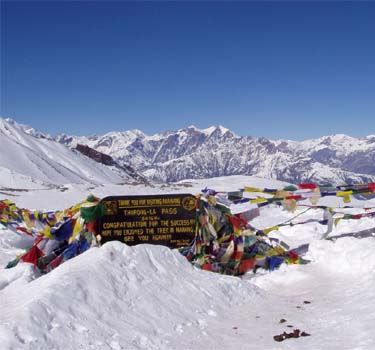
Annapurna Circuit Trek is one of the most celebrated treks in the world which takes you into the heart of the high mountains of Nepal. This trek has only been possible since the mid-1980s when the Manang area was officially opened to foreigners. This is definitely a strenuous trek, taking about a week to complete, starting from 2670m (Chame) and ascending to 5416m (Thorong-La Pass, the highest point of this trek).

Starting from Chame the trek heads towards Pisang, Manang, Yak kharka, Thorang La Pass, Muktinath, Kagbeni, Jomsom and finally ending in Pokhara.

This Annapurna circuit trek is a boon for people seeking adventure and thrill in their life, yes definitely is a boon, after all, there isn’t any place except Annapurna circuit where an individual can see an ever-extending mountain range, the likes of the deepest gorge called kali Gandaki gorge and much more fascinating, hypnotizing iconic beauty.

We all must have seen the golden shine on Annapurna in as many pictures or from the distant cities but this trek makes the closest possible encounter with silent, massive snow-capped mountains. The golden rays of the sun reflected from the 10th largest mountain, Yes Annapurna with the height of 8,091 m is certain to pause your breath for a while creating waves of excitation and excitement.

The maximum height of the trek will be around 5416m in Throng la pass so it is recommended to start the trek in spring or Autumn because the past experiences show the climate to be stable and reliable at this part of the year. It is certain to have continuous snowfall in the winter that makes route way more tedious and adverse hence March, April, May and September, October, November are the best months to choose for the trek although the trek is open throughout the year.

Given the name Annapurna circuit trek, it is certain to see Mount Annapurna but an Individual will also get a chance to see other beautiful mountains like Mount Machhapuchre (fishtail), Annapurna I, Annapurna South, Annapurna III, Mount Dhaulagiri, Mount Annapurna and Mount Mardi.

In this trek, an individual can witness the local traditions, culture, and civilizations of local Gurung, Manangi and Thakali people with warm hospitality and love chanting the motto to treat guests as a god.

The Annapurna conservation area located in the route of the trek is home to various endangered species giving shelter to rarest of the rare animals like Snow leopard, Himalayan Thar, musk deer, blue sheep.
The variation and gradient saw in geography, climate, wildlife, and vegetation resemble a close pattern of life with ups and downs if thought deep and insightfully which will open another dimension to make a close connection with nature and soul.

The color of Rhododendron and Orchid shining in the background of white mountains is certain to soak all the stress and pain to bring back the shine, color, and charms in your life.
Mustang Trip – 14 Days

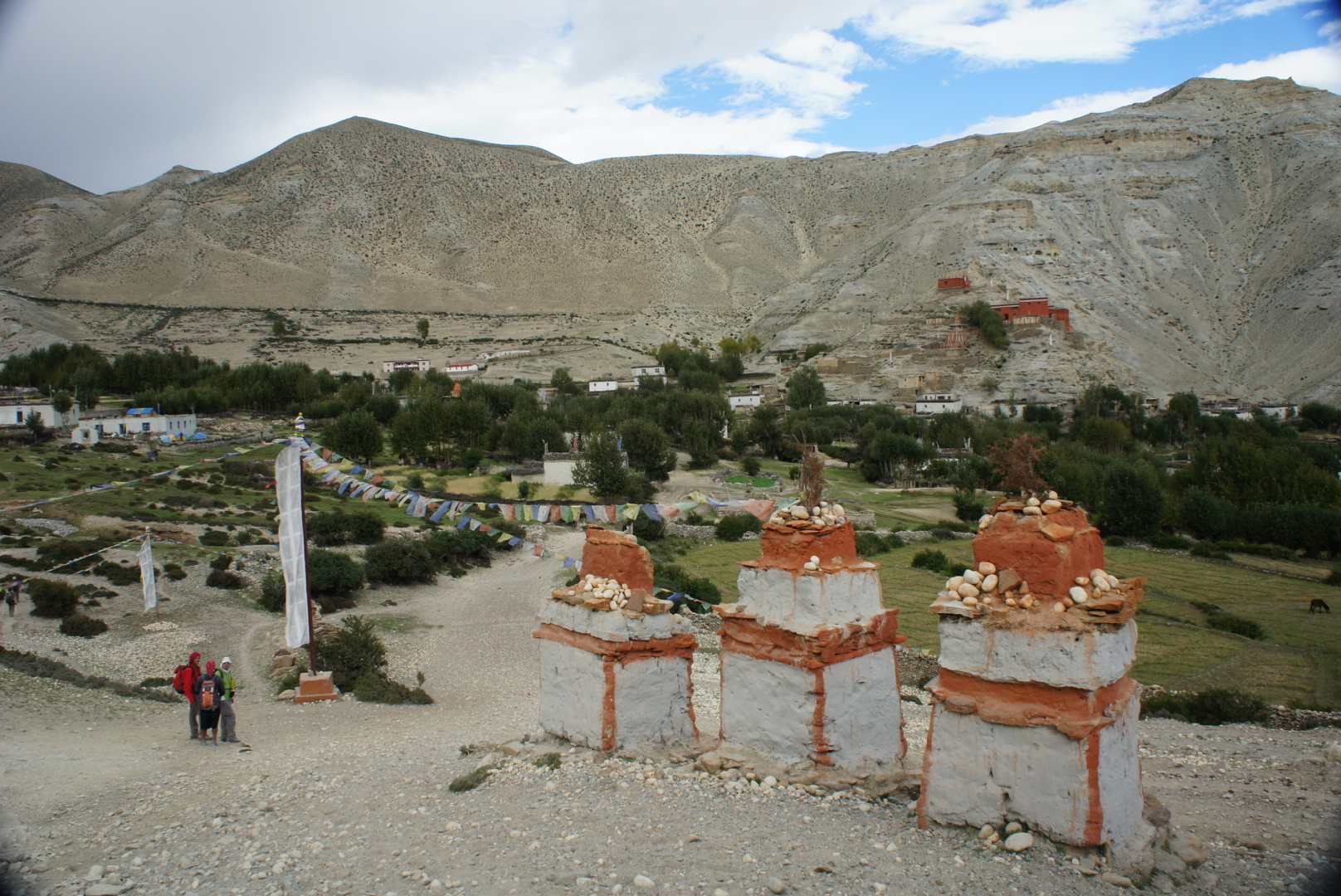
In Tibetan, Mustang means “fertile land.” Mustang Trip, or the trip to Kingdom of Lo, is an area located at the North-West of Nepal and it borders Tibet. Mustang was a prohibited area to foreigners up until 1991. Formerly independent, it’s now an integral part of Nepalese territory (since 1951.) Located behind a mountainous barrier, Mustang sits in a rain shadow, unaffected by the monsoons. It has a dry, desert-like, and windy climate. Here one lives with the rhythm of the seasons isolated from modern time. Fantastic canyons with red cliffs, chimneys of fairies, & monasteries; Lo Manthang, the royal capital city strengthened by high Mustang, is an exceptional voyage to the meeting of an authentic culture full of legends and secrets.

The Mustang Trip is arguably the optimum trip if you want to view and experience the nature in its raw and ruthless form since it is a high altitude desert of rich red and ocher land, deep gorges, narrow cliffs, and wilder mountains. Mustang, meaning fertile plain, appears to be live landscape painting in shades of red, brown, and other. It is one of the remotest areas of Nepal and is sparsely populated. Its elevation ranges from 1,372 to 8, 167 meters. The 7th highest mountain in the world the Mount Dhaulagiri lies here along with several peaks over 7,000 meters. The region, dotted with beautiful small villages, has more than 10,000 manmade caves; many of them are more than 1,000 years old. These caves have been used for centuries by the wandering ascetics of the oldest school of Tibetan Buddhism to perform tantric yoga.

Formerly, it was an independent kingdom, called the Kingdom of Lo, cut off from the world. The Monarchy was abolished in 2008. It was alone kingdom inaccessible to the outsiders. It was opened to foreigners only in 1992, and of course for the limited number of people with special entry permit issued only through registered trekking agencies. It makes it one of the most preserved regions in the world. It has an almost exclusive Tibetan culture. The entire district is included within the Annapurna Conservation Area, the largest protected area of Nepal.

The region has been of great interest to archaeologists, art historians, and anthropologists. Some of the caves in the region have frescoes and statues depicting practices of Buddhism. The region is still a center of Buddhist scholarship and art.

In addition, even the Temples feature amazing Tibetan art. Owing to its history and geography, it is one of the last bastions of traditional Tibetan life. What’s more, the scenery of the trail will reward you with forests of rhododendrons. Some of the top tourist attractions are Lomanthang, the Mustang Royal Palace, some of the oldest Buddhist monasteries such as Ghar gompa, Charang monastery,  Tibetan art and culture.

Everest Base Camp Trek – 19 Days

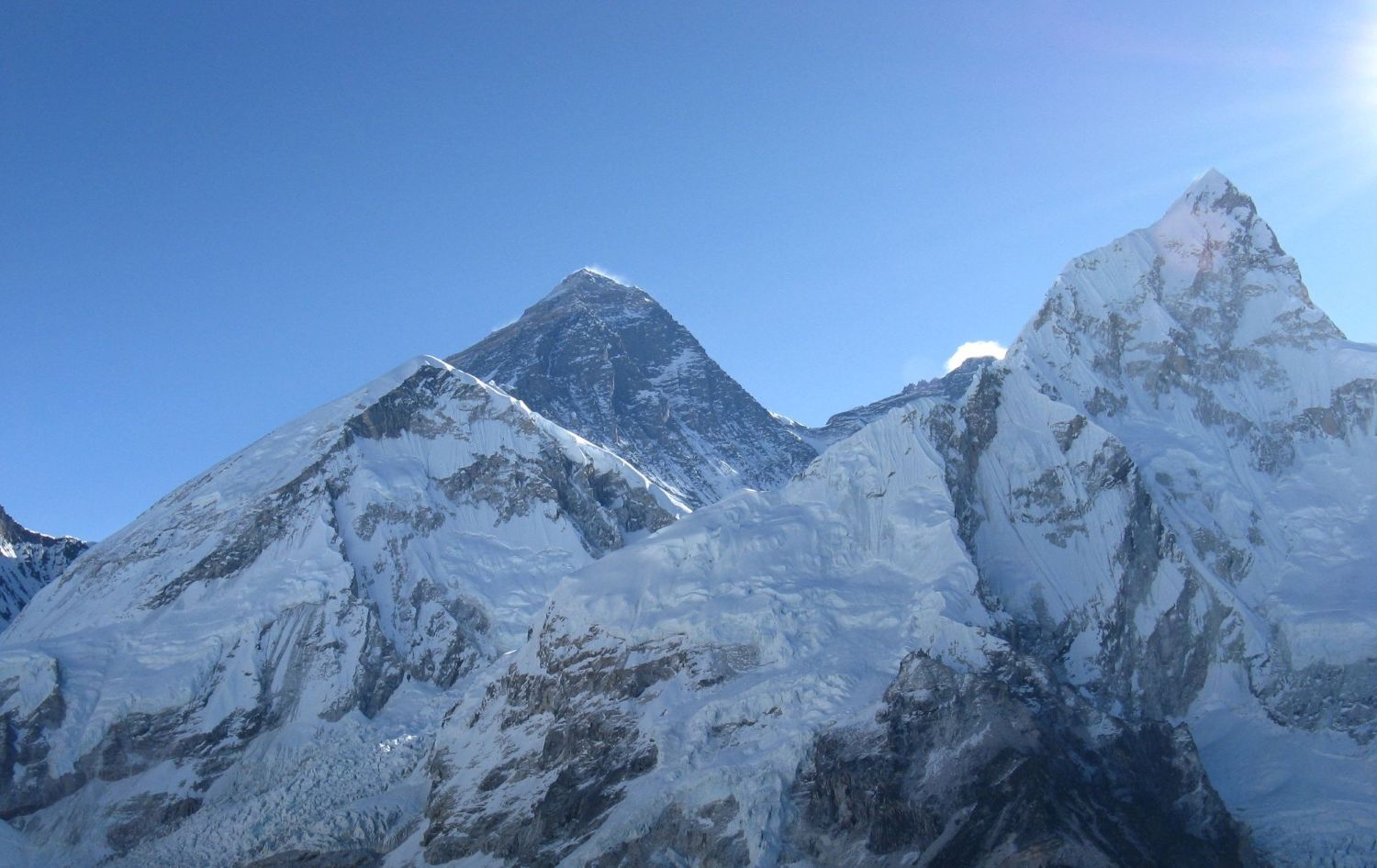
It may not be possible for everyone to summit the world’s tallest mountain The Mt. Everest, but each and everyone of us can make the Everest Base Camp Trek if we are really into the adventure. Trek to Everest base camp rank in 1st in the world for trekking destination list. Who wouldn’t want! Such is its grandeur.

It is obvious for travelers to wonder to know the height of Mount Everest and the elevation of Everest base camp.
Everest Base Camp trek is one of the most popular trekking routes in the world. Trekkers from all over the world come to Nepal for the Everest trek which is located in the Everest region.

And it does not take much—one can make it at a certain point in one’s life. It is absolutely worthwhile. Everest Base Camp tour is not merely about the Everest base; in fact, the route itself is grand. Once you reach Lukla by airplane, you can set off on foot from there traversing the varied landscapes—meadows, lush green pastures, steep hills, forests, arid land and many more.

Walking along the Dudh Koshi river, you will be enthused for oncoming excitements. In addition, the forests of rhododendron and magnolia will sweep you in surpassing serenity with its bracing breeze and dulcet rustlings.

They will add to your unremitting adventure and thrill. From Kala Patthar, you will have overpoweringly grand views of the Mt. Everest, the Lhotse, the Cho-Oyu, the Nuptse, the Pumori, the Ama-dablam, the Thamserku and others.
They can rouse one’s dullest of the senses.

The trek along the Khumbu Glaciers that lead to the Everest Base Camp is not less tranquil. It is pleasing and striking par excellence. The Sagarmatha National Park harbors exotic snow leopard and red panda among many others. Pastures, yak farms, and rustic rural set up on the way appear aesthetically pure. They will fill you with a sense of simplicity and warmth.

Furthermore, the region is culturally distinct and rich—a conventional lifestyle of the Sherpas, their arts and architecture and the Buddhist rituals constitute a different world in themselves. The people are equally rich in their hospitality.

They are simple and cordial. They are truly adorable people whose affection will keep you want coming back.

It can be your timeless experience, just make an effort to reach us. We will help you further ahead.

Lower Dolpo Trek – 20 Days

We know you want to spend some time in absolute wilderness, far from modern settlements. For this, the Lower Dolpo trek in the Dolpo  region is unequivocally your brilliant choice. Located in western Nepal, it is a high altitude region in the upper part of the Dolpa district.

Archaic and exotic, the region is culturally Tibetan. It is very thinly populated, and its people are the followers of the Bon—an animistic religion that predates Buddhism.

Lower Dolpo trek is evidently the lower part of Dolpo, sandwiched between the Dhaulagiri range and the Tibetan plateau. The trek begins from Juphal—first the flight will take you from Kathmandu to Nepalgunj, and from there you will be taken to Juphal by next flight. Thus, your trekking adventure will take the charge from here.

The trail traverses across varied landscapes—meadows, pine and oak forests, arid to semi-arid region. You will be surrounded by rolling hills and snowcapped mountains. The thrill will increase with the steps!

The trek is pertinent to high altitude trekkers, and even if you are not one such but audacious, you can make it only to find exotic animals, such as blue sheep and snow leopard in the Shey Phoksundo National Park.

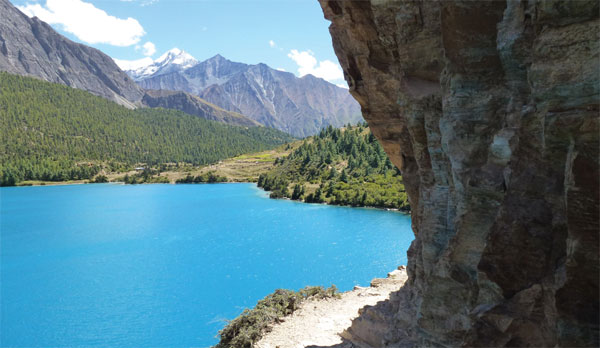
In addition to this, you will be spellbound by the gleaming cobalt-blue Shey Phoksundo Lake. Furthermore, the Numala Pass and the Bagala Pass at 5115 m and 5100 m respectively are also its major attractions from where you will have a majestic view of the Mt. Dhaulagiri (8167 m) and the Tibetan ranges the Kugung La and the Khyung La.

The region’s Eastern and the Southern parts appear supernal with the Dhaulagiri, the Nilgiri, the Kyangyu, the Ripa and the Annapurna range. Moreover, you will cross the passes to reach the Dho Tarap village at 4040 m.

Lower Dolpo trekking is not the only natural, but also culturally exotic, since the people here have close to the Tibetan way of life, and the religion they follow is animistic Bon Po, predating traditional Buddhism.

The trek is convenient in a way that the trail is always scant with the trekkers, for independent trekkers are not allowed and on top of that, a special permit is required from the government of Nepal. And, what furthers the ease the simplicity, hospitality and the kindness of villagers.
This all is going to make your trek truly special—a lifetime experience of beauty and boldness, a remote world and wilderness! A worthwhile experience.

Upper Dolpo Trek – 27 Days

No intention to intimidate, yet it is a raw reality—the Upper Dolpo Trek is not advisable to the maiden trekkers, since the trail ascends and descends precipitous hills and three high passes over 5,000 m, and on top of that, camping is the only way to spend the night; it is unbelievably remote, modernity has not even its meager presence, but it is fantastically alien that will overwhelm your sense of being. Your mind will be blown.

To some extent, you must be experienced and sort of intrepid to take on the Upper Dolpo Trek which is absolutely worthwhile because, in addition to colossal hills and landscapes, it will present you with some of the antiquated monasteries—one being the Shey Gompa, an 800-year-old monastery at the foot of the Crystal Mountain—and rare wildlife, like musk deer, Himalayan blue sheep and snow leopard in the Nepal’s largest national park the Shey Phoksundo National Park.

Besides, a lake of the same name the Shey Phoksundo Lake will tantalize you with its grandiose, its aquamarine presence is arresting. The Dolpo region, which is almost exclusively Tibetan in its culture, tradition, and language, will deluge you with its wilderness, the wilderness in the literal sense.

The Upper Dolpo Trek, bordering with Tibet, does not permit independent trekkers; rather only the organized groups with guides.

The region is rudimentarily modern, and its trek begins from Juphal after flying from Kathmandu to Nepalgunj, and finally Nepalgunj to Juphal.

The Upper Dolpo region, remaining closed to visitors until 1989, is a world in its own—alienated and aloof, nevertheless, wildly spectacular with verdant to arid landscapes, the view of the Mt. Kanjirowa among other amazing peaks, the Dhaulagiri massif. The region is remote, but its riches are unrivaled—the Shey Phoksundo National Park harbors rare and exotic flora and fauna, and whatnot.

Upper Dolpo is thinly populated with happy, humble and amiable people. They will win you with their hospitality.
And last but not least, this trek is a dare, but we can claim that it is the reason you want to make it, and you should. It is more than worthwhile, so do join us to explore the insane wilderness, together we will create a lifetime memento.

Manaslu Trek – 16 Days

The Manaslu Trek is one of the arduous treks, and presumably, it is one of the best but less trekked regions in Nepal. The trek, with its starting location Soti khola and ending location Dharapani–beautiful locations in themselves, is comparatively less trodden, for it was allowed to trek only 1991 onward, whose route will offer you a splendid view of ten peaks over 6,500 m. Moreover, along the route, the highest point you will reach is the Lyarka La pass, one of the longest passes in Nepal Himalaya, at an altitude of 5106 m. The Manaslu, in the Manaslu Circuit, is the eighth highest mountain in the world that stands 8163 m above the sea level in Mid-West Nepal. During the course of the trek, the tea houses will serve an immense opportunity to interact with the local people to learn the culture, tradition, and way of life; their innocence and simplicity will prove seductive. The trek traverses along an ancient salt-trading route along the Budi Gandaki river. Thereafter, the silver-white mountain peaks from this region will start mesmerizing you. Further ahead, the double peak Manaslu will reveal to you its glorious and grand presence which might prove an out-of-the-world experience. En route, you will have to go through the forest of lush green towering pine trees where you will be greeted with mellifluous chirps and euphonious psithurism. The trek is a genuine treasure trove, for it will, at no corner, cease to surprise you with varied cultural and natural riches–monasteries, monks and nuns in red robes, the highest village Samdo inhabited by Bhotias in the Budhi Gandaki valley, lofty Cheo Himal, Himlung Himal, and Kang Guru.

The trek, geographically rich and culturally variegated, is not open to independent trekkers, rather to groups led by the trekking companies; in fact, tourism is still controlled.

The Manaslu Trek may be a bit more challenging than usual since it is quite long, and ascending pass and high terrain require and extra effort. Thus, it would be best to be physically fit, but nothing to be intimidated with, for it is neither a competition nor a military training; we can adjust our pace, yet it would be better to come prepared physically.