Panch Pokhari Trek – 15 Days

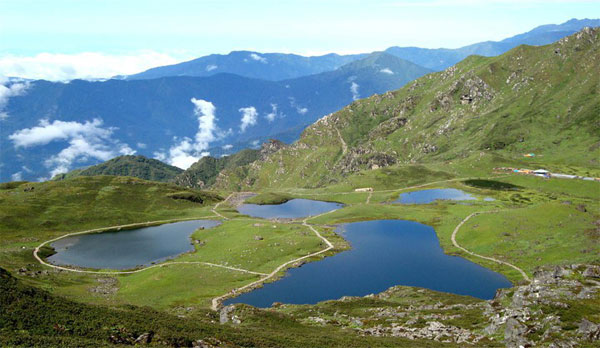
Panch Pokhari Trek is trekking to the Panch Pokhari —a group of five sacred Hindu Holy lakes, all so ravishing and resplendent in an ethereal atmosphere situated at a breathtaking altitude of 4100 m in the lap of Jugal Himal above sea level.

It is not only the 9th highest altitude wetland but also a rugged and raw mountainous and mystic region awaiting your visit to replenish you with its natures and rouse you spiritually. Yes, you hear it right! ‘Panch Pokhari’, which literally means ‘Five Pond’, is visited by Hindu and Buddhist devotees alike round the year, but especially during a festival, called Janai Purnima, the people constellate here.

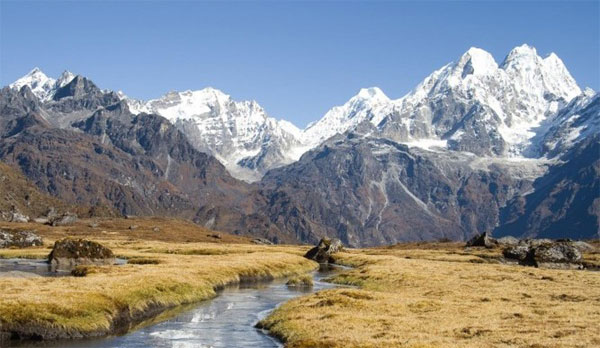
It, being a distinguished feature of the Langtang National Park, lies to the North of the Kathmandu Valley. Besides, the region gives way to the spectacular view of a chain of peaks, called the Jugal Himal, which includes the Dorje Lakpa (6966 m), the Madiya (6257 m) and the Phurbi Chhyachu (6637 m).

You don’t want to miss such a wonderful site! And, we know, you don’t merely want to be picked up and dropped there—you trek, so the real thrill lies in traversing the terrain and trail during the course of which you get to see the varied flora and fauna effusing exquisite exhibition. The 16-day Panch Pokhari Trek is a perfect package to help you achieve this.

The Panch Pokhari Trek adored and admired for its divinity and delightful wilderness, commences from Chautara; it stands at an elevation of approximately 1600 m above sea level and is a five-hour drive away from Kathmandu.

The trek, setting off at Chautara, goes uphill traversing a number of delicately beautiful villages, and forests bearing luscious rhododendrons.

It leads to Sano Okhareni followed by Thulo Okhareni from where you can have a strikingly expressive view of the mountains blanketed in snow. Henceforth, the trail, wriggling across thick forests of pines and rhododendrons, meets Kami Kharka from where you may allow yourself to be bewitched by the Mt. Langtang Lirung, the Dorje Lakpa, and different other peaks.

With this, the trek gets more adventurous, since, once you reach Pauwa Bas, the trail ascends a steep hill to Hille Bhanjyang. Thereafter, it gets rocky and richer in rhododendrons, all the way to Nasim Pati.

As you keep ascending, the path gets steeper which is bound to trigger your adrenaline release, but sooner, Panch Pokhari, with its five paradisiac ponds, two pilgrim houses and a temple of Lord Shiva, will pump you with euphoria; it further greets and treats you with the view of Jugal Himal Range, Rolwaling Range, Gosainkunda, Kanchenjunga, and Makalu.

Thereupon, you can walk down to Dhap—a settlement primarily consisting of an ethnic group, called Tamang, and therefore, a lovely opportunity to learn their exotic and unique culture, and way of life.

All in all, the Panch Pokhari Trek is an amazing assemblage of colossal cultural heritage, beguiling biodiversity, gleaming glacial lakes, and mammoth mountains. We claim that if you make this trek, you have a lifetime experience and elixir to cherish forever. It is tantamount to paradise found. Do take this chance to get what you seek. We are at your service.
Kanchenjunga Base Camp Trek – 30 Days

Kachenjunga Base Camp Trek leads you to the third highest mountain in the world, the Kanchenjunga, with an elevation of 8,586 m, lies between Nepal and Sikkim, India. Its three of the five peaks soar up directly on the border, while the other two in Nepal’s Taplejung District. In fact, the literal meaning of Kanchenjunga is ‘five great treasures of snow’.

This remote but wondrous region is not much explored, which is the reason why you are suggested to discover the pure and pristine treasure trove of picturesque delights and rocky terrain. Its trekking duration is designed in such a way that you can profusely absorb every bit of its beauty. What makes it all the more tempting to adventure seeker is its permission to trekking—only since 1988, due to which the ambiance of freshness will appeal to your senses of sight and smell.

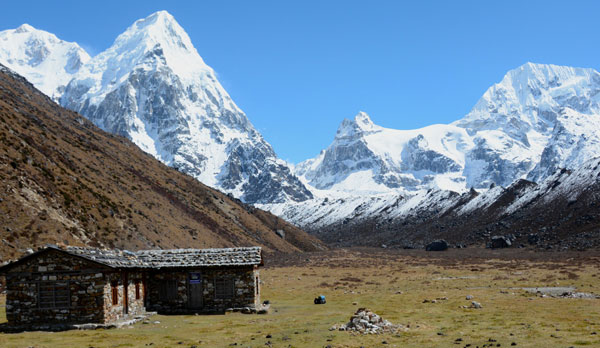
The Kanchenjunga  Base Camp Trek, which commences from Taplejung, takes you from tropical lowlands to the high glaciers and the majestic peaks of the Kanchenjunga, the Kambachen, the Yalung Kang and the Jannu. The highest point of the trek will be the Pang Pema (5,140 m). Standing atop it to view the whitish landscapes will be quite an ethereal experience. To get to that point you will pass through verdant terraced fields and lush green forests. On the way, the quaint traditional villages will be the best of the things with expansive people.

The trail, going northwards to Ghunsa followed by an ascent to the Kanchenjunga Base Camp, and continuing to the Yalung Base Camp, go through the Kanchenjunga Conservation Area—one of the least densely populated areas in Nepal—is home to the endangered snow leopard and red panda, vulnerable Himalayan Black bear, clouded leopard, and Assamese macaque. There are more than enough to entice you.
Justifiably, one of the most exotic aspects is ethnicity—predominantly the Rai and the Limbu. They are culturally rich and sufficient.

All in all, this one-month trek is so for all the right reasons. It has so much to offer that you wouldn’t want to miss. And we are here to make it happen in the best way possible. Please, do contact us.

Makalu Base Camp Trek – 20 Days

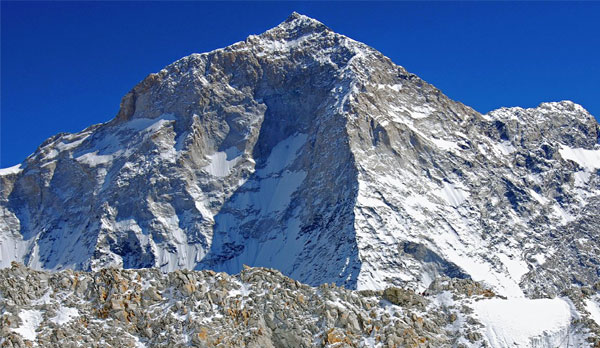
The Makalu is the fifth highest mountain in the world, And Makalu Base Camp trek is arguably your first-class choice if you are seeking a strenuous adventure followed by soothing views of majestic Himalayas.

This trek is a treasure trove of beauty, for it bears the world’s only protected area the Makalu Barun National Park with an elevation of more than 8000 m. Its staggering flora and fauna with a cornucopia of species, high waterfalls, and mountain peaks will keep you stunned.

In addition to this, you are bound to fall in love with the rivers here—the Arun, the Barun, and the Dudhkoshi among the others are pristine and praiseworthy.

What’s more, the Makalu Base Camp Trek will offer you a rarely savored Kangshung face of Everest which is unparalleled.
It also hosts some of the exclusive creatures, like snow leopard and Himalayan black bear.

The arresting array of things here will not stop amazing you over and over. Despite being magical, and pretty close to the Everest region, the craggy trekking route of the Makalu region is virtually virgin.

The incredibly ravishing area is rich not only naturally—abundantly filled with a myriad of precious plants, and animals, such as snow leopard, wolves, fox, lynx, and beautiful birds—but also culturally.

You will trek along a significantly long route that twists and turns across flat plains of Terai (200 m) having a hot climate to the Makalu Base Camp (4812 m), and covers substantial picturesque natural and cultural heritage of Nepal.

The least visited far-East of Nepal will surely give you a unique experience through its never-seen-before culture, tradition and pastoral life; you will be delighted. The royal views of the south face of the Makalu, as well as the Everest and the Lhotse, will be etched in your heart.

Last but not least, the Sherpas of this region will your heart with their hospitality and splendor.

Tilman Pass Trek – 20 Days

The Tilman Pass Trek, named after a pioneer British adventurer and explorer H. W. Tillman who explored the Himalayas in the mid-20th century, lies in the remotest region of Central Nepal. It makes a strenuous but adventurous trekking region in the wilderness of Upper Langtang which holds the Langshisha glacier, five sacred lakes of Panch Pokhari, and the Jugal Himal. Red panda and blue sheep make the region more valuable and alluring. With some basic snow-climbing and traversing one of the highest passes in the Himalaya, you will experience wilderness and remoteness at its extreme.

The Tilman Pass trek is located between the Langtang trekking region and the Panch Pokhari trekking region near Tibet border, which will reward you with panoramic Himalayan views of Langtang and Lirung, Langtang Himal, Naya Khang, Yala Peak, Ganesh Himal, Langshisha, Gaurishankar, and Dorjelakpa. Furthermore, you will enjoy walking through forests of rhododendrons and pine trees. You might be able to watch bear, leopard, jackal, pheasant, and peacock.

Prior to starting off your trek from Chautara, where you will reach after a 5-hour scenic drive from Kathmandu, through the scenic hills and villages, you will visit different religious, historical, and cultural sites inside the Kathmandu Valley. The Swoyambhunath Stupa and Patan will be in top priority. The trail is embedded among the wonders. Indeed, the trek is strenuous, but it is not constantly so; you will be passing through refreshing and rejuvenating forests filled with oak, pine, rhododendron, and juniper, for hours and hours. Moreover, during the course of trekking, you will climb to Hile Bhanjyang situated on the ridge of a hill, which will offer you a great view of the waterfall, river basin, and surrounding peaks. Further ahead, upon reaching Panch Pokhari, a group of five sacred lakes in the lap of Jugal Himal, you will be in absolute awe of those placid peacock blue lakes. Once you reach the Tilman Pass at an altitude of 5,320 meters, you will be descending thereupon. Your trek will conclude at Syabrubesi, from where you will drive to Kathmandu.

Ghorepani Poon Hill Trek – 12 Days

Ghorepani Poon Hill trek is a short, easy and enjoyable trekking destination which lies in the western region of the Nepal. It is ideal for people with a desire to enjoy the panoramic view of mountains and encounter village life who are short on time or who have concerns about high altitude trekking. The Trek will begin from Naya Pul, a short drive from Pokhara. This trek is popular for the beautiful landscapes, including rice terraces, panoramic views of the silvery mountains, and walking through the world’s biggest colorful rhododendron forest. You will also be able to observe the different community’s cultures, their living style and traditional dress of the Gurung and Magar people.

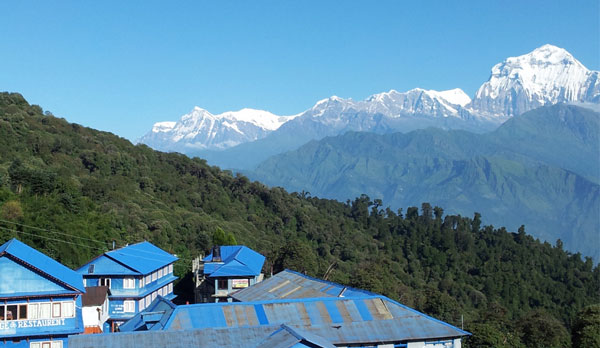
Not only artificial, but nature also can be ritzy. You can feel considerably so during the Ghorepani Poon Hill Trek. The sunrise and the sunset views from Poon Hill at an altitude of 3,210 m will be heartwarming. It will evocatively transfix you to its beauty. Besides, the ageless charm of the Dhaulagiri, the Annapurna, the Machhapuchhre, the Nilgiri will be etched in your heart that you will be able to relish all your life.

The trek in the Annapurna region is quite popular, for it is easy, and harbors the beauty the best of its kind. Once you get to remarkably beautiful city Pokhara, itself a major tourist destination, you will be driven to Nayapul from where you will commence your trek. Thereafter, you will trek across quaintly impressive ethnic communities: Gurung and Magar. The Gurung village Ghandruk will be particularly riveting. It is preceded by other amazing places, Tadapani and Tikhedhunga.

Poon Hill trek evidently is a hill station that offers a staggering view of the Annapurna range and the Dhaulagiri mountain range, whereas Ghorepani is a village that lies within the Annapurna Conservation Area. You will have to pass this village to get atop Poon Hill. The village lies on a trail linking the Annapurna Base Camp, and it provides necessary food and lodgings.  It, lying in the center of the Annapurna Conservation Area, is on the way to Annapurna Sanctuary. From atop you will have mesmerizing views of the sunrise and some—in fact over 17—majestic mountains. The panoramic view in their utter glory and harmony will stay with you forever.

Poon Hill is known aptly as a photographer’s paradise for all the right reasons. You can get awesome snaps of the astonishing the Annapurna and the Dhaulagiri ranges.
The Ghorepani Poon Hill trekking, also popular as the Annapurna Sunrise Trekking, and the Annapurna Panorama Trekking, will walk you through striking ethnic villages of the Annapurna region where you will find expansive people—warm and welcoming. The trail also passes through vibrant rhododendron forests. The chirps and rustles will invigorate you. Your senses will be served serenity. Besides, terraced slopes and paddy fields won’t be less bewitching.

Glimpse of the Valley – 7 Days

Glimpse of Valley tour; a short and easy tour to provide you a glimpse of the facts what Nepal has to offer in terms of historical heritage sites, traditions and natural beauty of landscapes. This short visits of two valleys gives you an experience that motivates to explore more of this Himalayan nation and moreover to explore your own inner adventurous nature.

Your Tour guide will help in weaving all the historical, religious, and cultural sites into a story of this two distinctive valleys. In fact, those sites themselves conspire to create one. It becomes all the more compelling in a country like Nepal which is one of the oldest nations with glorious history, never colonized. Everything is pure and original. In this matter, Kathmandu gives you a perfect commencement for a classic Nepal tour and Pokhara concludes your tour with awe striking natural beauties.

Firstly, your Glimpse of the valley tour will commence the visit with Boudhnath, one of the oldest and largest stupas in the Kathmandu Valley.  Next, your visit to Patan, the second largest town in the valley, will be an extraordinary experience, for it is a wonderful town with aesthetic and artistic antiquated monuments. It has several ancient temples and stupas. Every piece is a work of art and craft. More than anything, the Patan Durbar Square, a UNESCO World Heritage Site, is a pure marvel. The Square displays numerous temples and historical structures. Patan’s other attractions are Patan Museum, Uku Bahal, Sundari Chowk, and Krishna Temple.

What’s more, later on, you will take a scenic drive to Pokhara, a tourist city also called tourism capital of Nepal. You will visit some of the best view points and landscapes in Pokhara valley.

The tour will be fantastically concluded with a visit to the Syowambunath and Kathmandu Durbar Square. Swoyambhunath, one of the oldest stupas in the Kathmandu Valley, which is situated on the top of a hill. This holy place considerably expands to include various secondary shrines, monastery, garden, and cafeteria.