Tibet Tour – 8 Days
  • Duration8 Days
  • Trip DifficultyModerate
  • Best SeasonLate Spring to early Autumn
  • Arrival CityKathmandu
  • Departure CityLhasa
  • Altitude maximum5220m
  • TransportVehicle
  • AccomodationHotel / Guest House
  • HighlightsCulture / Landscape

Overview

Tibet Tour leads you to the place, popular as the “roof of the world”, Tibet, the historic and autonomous region of China, occupies a huge area of the Tibetan Plateau. Since it was virtually detached from the rest of the world before the 1950s, its culture had uniquely developed around the Tibetan language and Tibetan Buddhism. With minimal economic development, Tibet was all about culture.

Tibet Tour is also famous in the world because of the most expensive and dangerous dog Tibetan mastiff.
The Tibet population being near-to-entirely Tibetan, the majority of people have the same ethnic origin. Though the economy primarily depends on agriculture, now tourism is further buttressing it rapidly and efficiently. It has become one of the most loved and admired tourist destinations. Interesting—it is famously known as the mecca for mountaineering and adventure, and culture, and Buddhism. it is wonderful. You will find so as soon as you land in Lhasa.

Lhasa, at an elevation of 3,650 m, is the capital of Tibet near the Lhasa River. It is an important cultural and historical city, hugely revered by the Tibetan Buddhists. It is also the religious center of Tibet.

The Jokhang Temple, built in the mid-7th century CE, is the holiest place in Tibet. Its other striking landmarks are the Potala Palace, once the winter residence of the Dalai Lama, and Norbulingka, the former summer palace of the Dalai Lama. Norbulingka is also called the People’s Pleasure Park. Further, Drepung and Sera are two of the largest monasteries in Tibet.

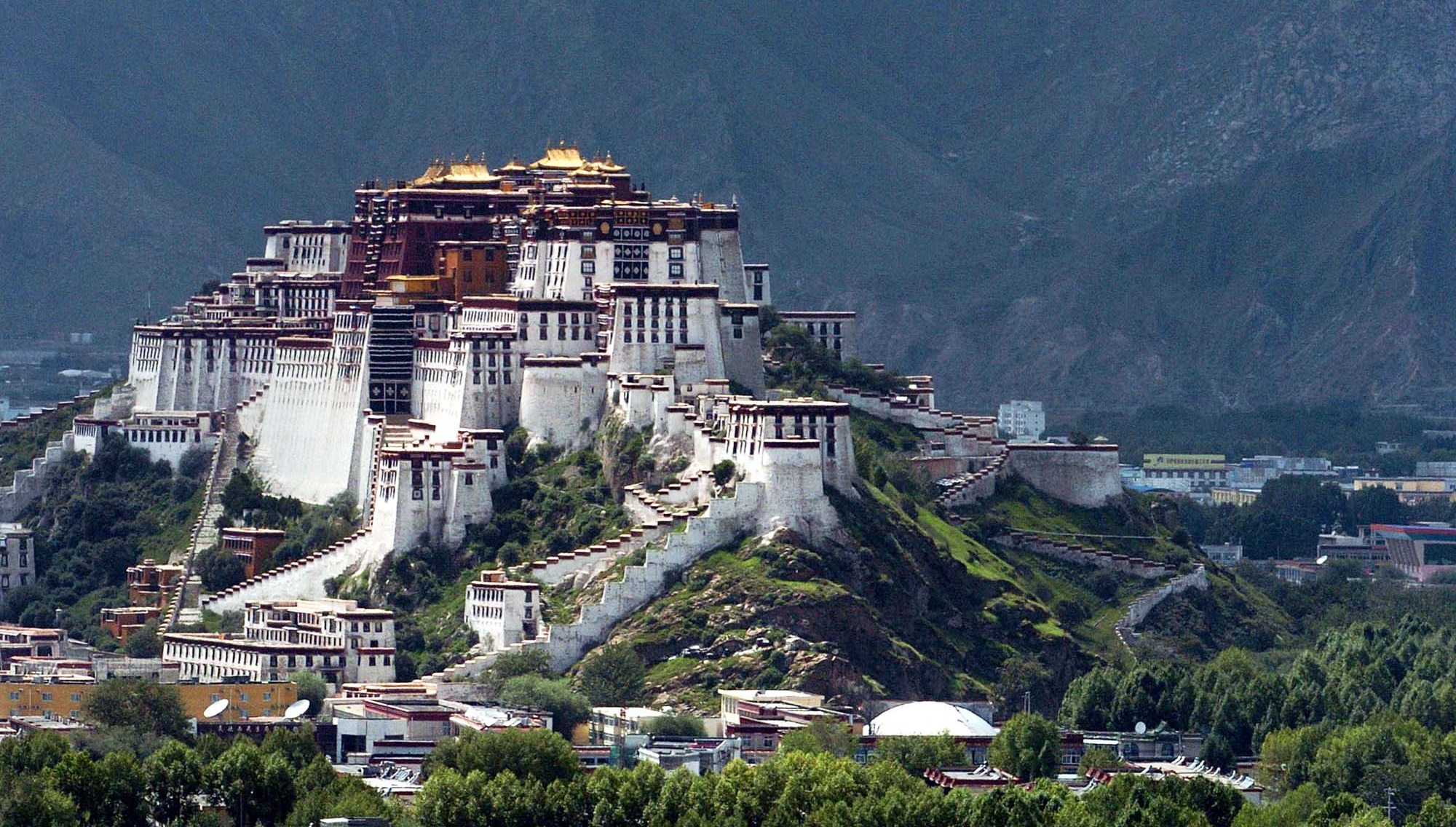
They will surely fill you with spiritual awe. The Potala Palace is the landmark and the symbol of Tibet and honored as one of the most beautiful architectural buildings in the world. Thus, it can be viewed as the symbolic architecture of Tibet. With over 1,000 rooms, it is the palace at the highest altitude. It is built on the Red Hill by the side of the Lhasa River.

Likewise, Tibet Tour takes you to the Jokhnag Temple which is the religious and spiritual center of Tibet. Along with the Potala Palace and the Norbulingka, it is also listed in the UNESCO World Heritage Site. Norbulingka, meaning “Park of Treasure”, used to be the summer palace of the Dalai Lama. Now the region also has the biggest man made garden in Tibet. And, the Barkhor Street, which has a market you will be visiting, is a popular commercial center. Also, Drepung and Sera monasteries will be your great aesthetic and spiritual wonders.
In fact, you will see it a lot!

Detailed Itinerary

Early morning drive to Rasuwa gadi, drive will take about 6 to 7 hour. Drives offer a view of terraced fields, rivers, and rustic villages of Nepal before we enter Langtang National Park Area. From there further 1-hour drive to Rasuwagadi through narrow and zig zag road. After immigration formality of Nepal, we take a short drive and walk through the bridge before we do the entry formality of Tibet where you will meet a guide from the Tibet side. After immigration formality, we drive of about 24 km around 1 drive to Kyirong where we end the journey of the day.
Overnight: Hotel

Today we will drive up to the Tibetan Plateau. The first high pass is Ghungtang Lhamo pass at 5236 meters. On our way up you will feel the change in the climate. Enjoy the Tibetan scenery. We will pass magnificent valleys and several Tibetan villages on our way. We will have enchanting views of Mount Shishapangma and Piku Tso Lake.
Overnight: Hotel

Early in morning, we drive off route leaving the Friendship Highway and drive towards Base Camp driving over Pang La pass (5150m) from where we can see an incredible view of the Himalayan range stretching from Mt. Malaku to Mt. Shisapangma. Before arriving at the Qomolangma/Everest Base Camp (5200 m) we stop at the world highest Rongbuk Monastery at (4980 m) and after taking a lunch break at the Monastery Guest House then we drive toward the Base Camp. Enjoy the closer view of Mount Everest and drive the same way back to Shegar.
Overnight Hotel

*Note: Our vehicles are prohibited from TashiZom onward, and all tourists must use an environmental protection bus up to Rongbuk.

After breakfast, we will drive to Shigatse, where we will visit Tashilimphu Monastery and the local market. TashiLhunpo Monastery holds historical and cultural importance for being founded in 1447 at the time of 1st Dalia Lama Gendun Drupa, a disciple of Tsongkapa. Hence the monastery is also one of the biggest functioning monasteries of Gelugpa. The monastery is the traditional seat of successive Panchen Lamas, the second highest-ranking tulku lineage in the Gelug tradition of Tibetan Buddhism.

After a visit to the monastery, you will have time to experience daily Tibetan life on the local market. Smell the different fragrances and observe the colors of the local products. Mingle with locals and get a feel of Tibetan life.
Overnight: Hotel

Early in the morning after breakfast, we will continue our journey to Gyantse, the third largest city in Tibet, where we will visit Khumbum Stupa and Pelkhor Chorten. Khumbum Stupa is the only Nepalese-style Stupa built in Tibet. The name means ‘hundred thousand images of Buddha’ and that name reflects the decorations of the stupa. Walk up this Stupa in the clockwise direction. From the top, you will have a wonderful view of the old part of Gyantse.

Pelkhor Chorten is located next to the Stupa and was built in 1418. The monastery is a mix of Han, Tibetan, and Nepalese architecture. This monastery consists of 15 different chapels and halls and houses three different orders of Tibetan Buddhism. The main temple of the monastery is the Tsulaklakang. This temple has three floors and you will find murals and images from the 15th century.

After lunch, we will drive to Lhasa. On our way, we will drive over three spectacular high passes – the Simi La at 5000 m, the Karo La at 5050 m, and the Khamba La at 4790 m and over and along the beautiful Lake called Yamdrok Lake or Turquoise Lake. Yamdrok Lake is a sacred lake and is one of the three biggest sacred lakes in Tibet. The views are stunning. The turquoise lake is 72 km long and surrounded by snow-capped mountains. In the distance, you will be able to see the holy Mount Nyenchen Khangsar (7191m).
Overnight: Hotel

This morning we visit the Potala Palace, winter home of the Dalai Lamas and the most famous landmark in the world. Although the palace cannot be freely explored, you will experience some of its chapels including the audience hall, the golden burial Chorten (Tomb) of Past Dalai Lamas, a tremendous number of paintings on the wall, Statue, Thangka, and Mandala, etc.

After lunch, we will visit Jokhang Temple, the spiritual heart of Tibetan Buddhism and an important sacred site in Tibet.  The Temple was founded during the reign of King Songtsen Gampo for his two brides Princess Wencheng of the Chinese Tang Dynasty and Princes Bhrikuti of Nepal, both are said to have brought important Buddhist images and statues from Nepal & China to Tibet as part of their dowries. After visiting the Temple explore Barkhor surroundings, and watch the pilgrims prostrating themselves near the front gate of Jokhang Temple. Take part in a clockwise circuit walking around the temple, walk around narrow alleys to explore old Lhasa city.
Overnight: Hotel

This morning we will drive 8 km northwest of Lhasa to visit Drepung Monastery which is one of the “great three” Geluk Monasteries of Tibet, founded by Jamyang Choje in 1416. The Drepung is the largest of all Tibetan monasteries and was once home to as many as 10000 monks. This winter Palace was the residence of hundreds of monks from all the major Geluk monasteries for staffing individual Chapels.

Later we will visit Norbulingka Palace which is also called the “Jewel Park”, is a large open area about four kilometers to the west of Lhasa, and is referred to as the summer palace of the Dalai Lama. Since the time of the eighth Dalai Lama, the park has been used as a summer palace, retreat, and recreation area for the successive Dalai Lamas.

In the afternoon drive 5km away from Lhasa to Sera Monastery founded in 1419, another one of the “great three” Geluk monasteries of Tibet. The monastery is well known for the monks debate at around 3 – 5 in the afternoon.
Overnight: Hotel

You will be driven to the airport on time to take a flight back to your next destination.

Tour Price Includes

  • Twin-sharing accommodation as per the itinerary on BB basis (Bed and Breakfast)
  • English-speaking Tibetan Guide
  • Transportation as per the itinerary by the necessary vehicle mentioned above
  • Entry fees for the mentioned places
  • Tibet Travel permit
  • Portable oxygen cylinder in vehicle
  • 1 bottle of water every day
  • Border transfer from Kathmandu to Rasuwagadi

Tour Price Does Not Include:

  • Travel Insurance
  • Tibet Visa Fee 
  • Flight ticket Lhasa – Kathmandu OR to the onward destination
  • Lunch and Dinner in hotel OR restaurant
  • Drinks beverages (hard and soft drinks)
  • Expenses of a personal nature, phone calls, laundry, etc
  • Gratuity to staff
  • Services not mentioned herein

NOTE: The given tour price is based on 2 – 3 pax; it will be adjusted according to the group size.

Climate

Average Temperature of Tibet

Month Temperature
January -13°c à 9°c
February -12°c à 10°c
March -5°c à 13°c
April 1°c à 16°c
May 5°c à 20°c
June 9°c à 25°c
July 10°c à 26°c
August 9°c à 27°c
September 8°c à 21°c
October 1°c à 17°c
November -7°c à 12°c
December – 13°c à 8°c

Equipments

Luggage

  • Travel Pack / Suit case
  • Day pack

Clothing

  • Lightweight, low maintenance and versatile clothing
  • Shirt/t-shirt(s)
  • Convertible travel trousers
  • Lightweight fleece
  • Lightweight waterproof jacket
  • Comfortable shoes/boots
  • Sandals
  • Hat (sun/warm hat)
  • Warm clothes / Jackets / trousers (If travelling in early Spring / Autumn / Winter)

Accessories

  • wallet
  • Luggage locks
  • Head light (torch)
  • Wash bag
  • Travel towel
  • All purpose travel soap
  • Small repair kit (needle and thread)
  • First aid kit
  • Accessory bags
  • Guide book
  • Electrical adaptor
  • Insect repellent
  • Sun cream

Document

  • Valid passport
  • Print out of Airline tickets
  • Contact detail of Embassy / Tour agency
  • Travel insurance